Week 2: Warsaw, an uprising cold city

J.Gong
2026-01-15
2.35min
Week 2: Warsaw, an uprising cold city
I am officially beginning my “expensive” journey from Tallinn to Porto using only green travel (buses and trains). On the 12th, I was still debating when to leave when I noticed a FlixBus heading to Warsaw in just a few hours. I hesitated—it’s a 15-hour journey, and sadly, there is no sleeper train option. However, I realized I couldn’t stop in every single city if I wanted to make progress. I hit “book” and began the trek.
My First FlixBus Experience
I’m impressed by how FlixBus covers almost every corner of Europe. Their app is excellent, though I found one major frustration: they use a 12-hour time format in certain views, which caused some confusion while I was planning my itinerary.
Since my stop wasn’t a main terminal but a parking lot at the Tallinn harbor, I did some research on Xiaohongshu (RedNote) to make sure I was in the right place. Most passengers had come over on the ferry from Helsinki. Luckily, the bus wasn’t crowded until we reached Poland. Being on the shorter side, I managed to sprawl across two seats, using the seatbelt to keep from falling off. It wasn’t exactly comfortable, and I hardly slept, but it did the job.
Observation: The bus had a toilet in the middle, which was new to me! I previously thought buses had to stop every few hours for rest breaks. I actually double-checked on RedNote and Gemini to confirm if it was okay to use it while moving!
First Impressions of Warsaw
Like Berlin, Warsaw uses an integrated ticket system for all city transport. I used the Jakdojade app to buy a three-day pass, though I felt I wasted a bit of money since I stayed mostly in the city center and walked.
Tip: You’re supposed to validate your ticket by scanning a QR code on the bus or tram. However, I couldn’t find a code to scan on the train from Warsaw East to the Central station!
I arrived early in the morning, but since my hotel check-in wasn’t until 3:00 PM, I found a nearby café. Prices are slightly lower than in Tallinn. My immediate impression? Warsaw looks remarkably like a rising city in Northern China. It’s a landscape of massive squares, towering buildings, and incredibly wide roads. The competition for services is fierce; you’ll see multiple brands of convenience stores or cafés fighting for market share on a single block.
The vibe of the people is also distinct. In Estonia, people tend to be stoic and emotionless. In Poland, people look… angry? Or perhaps just very intense. While sitting in a café, a beggar asked me for cash. Since I only had Euros, I gave him a loaf of bread instead.
The Food Scene
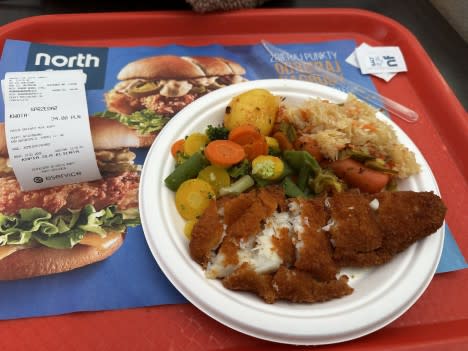
Honestly, I love Polish food. It reminds me so much of Northeastern Chinese (Dongbei) cuisine—it’s hearty and suits my palate perfectly.
A few quirks I noticed:
- Ketchup is free (unlike in some parts of Europe).
- McDonald’s charges for paper cups, and KFC charges for take-out bags.
- KFC offers free refills!
- I tried North Fish (a Polish fast-food chain) and loved it. They have a great salad buffet included with the meal.
CD Projekt Red
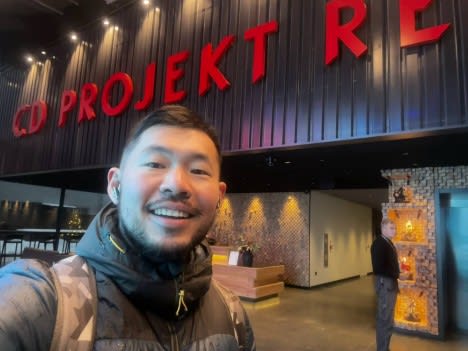
I passed by CD Projekt Red, a great game studio made projects like The Witcher and Cyberpunk 2077. After I visited the Warsaw’s old town. I found the studio is just one the same tram route.
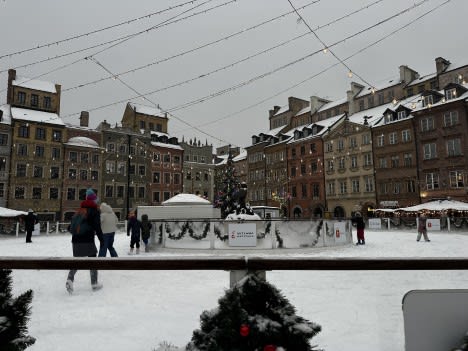
Nightlife & Culture
I visited Instytut, a cruising bar. Compared to the wilder crowds at Berghain in Berlin, the crowd here felt quite shy. Most people were speaking Polish, but I still had a very enjoyable night.
Moving On: To Berlin
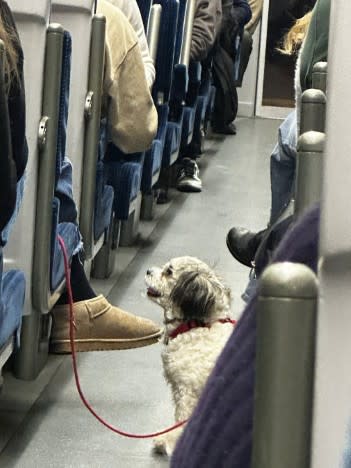
The train from Warsaw to Berlin is a joint operation between PKP (Poland) and DB (Germany). Unlike many regional trains, these have assigned seats. My second-class seat even came with a power outlet, which was perfect for charging my laptop and catching up on work as the landscape blurred by.